
By Tina Agustari
Hidden in South Sulawesi, Lake Matano holds ancient depths, rare ecosystems, and a rich history—making it an unforgettable natural destination
A Tectonic Marvel with Ancient Origins
For those seeking a lake-based tourism experience unlike any other, Lake Matano is a destination worth exploring. Nestled in Dongi Village, Nuha District, Sorowako City, East Luwu Regency, South Sulawesi, it proudly holds the title of the deepest freshwater lake in both Indonesia and Southeast Asia.
Lake Matano is a tectonic marvel, formed by the shifting of Earth’s plates rather than volcanic activity. Estimated to be millions of years old, this ancient lake invites travelers to uncover its timeless stories and immerse themselves in the natural and cultural heritage that surrounds its pristine waters.
Record-Breaking Depth and Size
In the Dongi language—spoken by the local community—“Matano” translates to “spring,” a name that reflects the lake’s essential role in sustaining both the surrounding ecosystem and the lives of local residents.
With a depth of 594 meters, spanning approximately 16,000 hectares, and measuring 28 kilometers in length and 8 kilometers in width, Lake Matano is recognized as the deepest lake in Southeast Asia and ranks eighth in the world, according to the World Wide Fund for Nature (WWF).
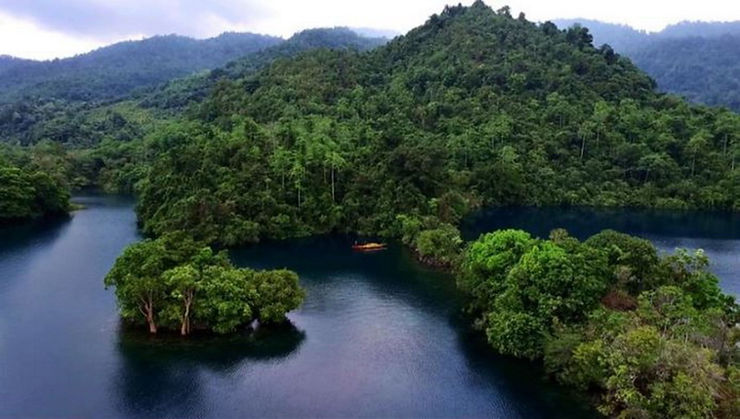
Sustained by thousands of natural springs, Lake Matano never runs dry. Its waters are remarkably clear and still, allowing visitors to see the lakebed as deep as 20 meters below the surface.
Lake Matano is one of the favorite sites for scientific research. Along one side of the lake, limestone cliffs and caves conceal historical artifacts—spears, machetes, and brass household tools—believed to be centuries old. These discoveries have captivated researchers and archaeologists, offering compelling evidence that the area once served as a vibrant center of human activity.
Indonesia’s Ancient Aquatic Treasure
Although not yet designated as a UNESCO World Heritage Site, Lake Matano has earned international recognition for its remarkable depth and one-of-a-kind ecosystem. It is home to rare and endemic species found nowhere else on Earth, including the Butini fish (Glossogobius matanensis), the Bungka crab (Paratelphusa), and the freshwater snail Brotia.
Lake Matano is also part of the Malili Lake System, a chain of five interconnected lakes: Matano, Mahalona, Towuti, Masapi, and Wawantoa. Scattered across the heart of Lake Matano are several small islands, particularly along the southeastern shoreline near the Otuno and Soluro regions. Among the most notable are Nuha Lang Kai (Big Island) and Nuha Le (Alang-alang Island), each adding to the lake’s scenic charm.
With its extraordinary natural features and ecological richness, Lake Matano offers immense potential as a destination for both educational and eco-tourism. Its breathtaking landscapes not only captivate the senses but also ignite curiosity. Here, visitors can immerse themselves in the geological, biological, and cultural wonders of this ancient lake.
Whether you’re a nature enthusiast, a curious traveler, or a passionate researcher, Lake Matano promises meaningful encounters with the past and present. Each visit becomes a journey of discovery and inspiration